

Notes from the farm: Meeting the Moment: alternative pathways to land tenure
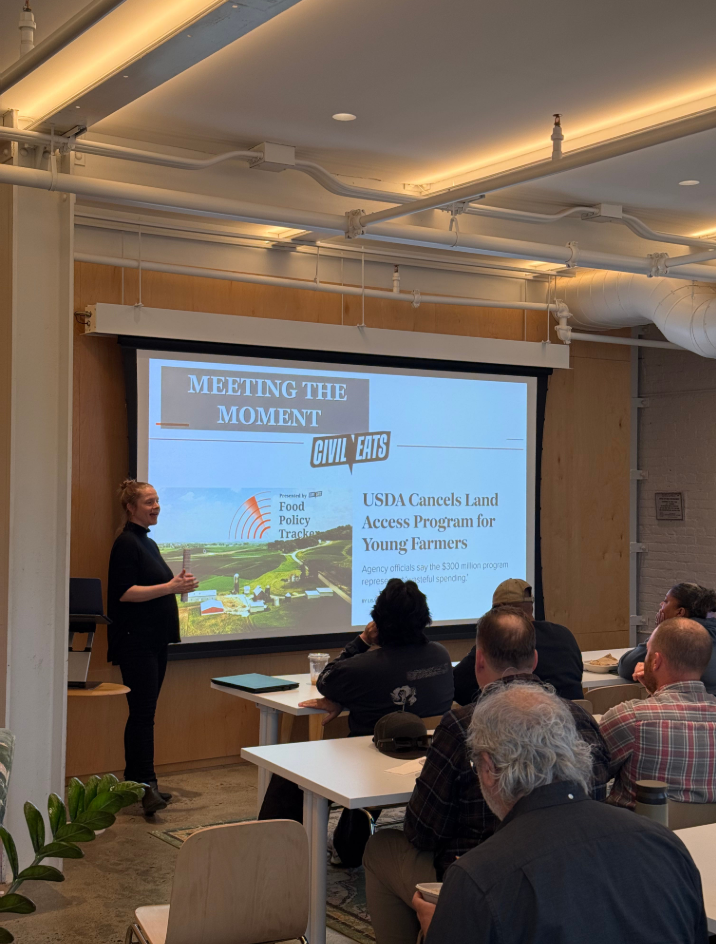
Molly Johnston-Heck from American Farmland Trust
April brought disappointing news: the USDA canceled its $300 million Increasing Land, Capital, and Market Access Program, which had been instrumental in connecting beginning farmers with the resources to bridge the gap between needing land and being able to buy it.
In the wake of the announcement, farmers and advocates have been sounding the alarm on the rapid loss of farmland across the country. It was fitting timing, then, that Wally Farms, American Farmland Trust, and West Branch Commons had already planned a joint event to share our work with the community.
Last Sunday, under gray skies and steady rain, more than 50 farmers, service providers, funders, and community members gathered with us at the Spark of Hudson to hear about projects aimed at getting farmers onto land where they can truly set down roots.
AFT's Molly Johnston-Heck set the scene — the acres lost to development every day, the lack of access to capital and credit, the sense that this is an emergency.
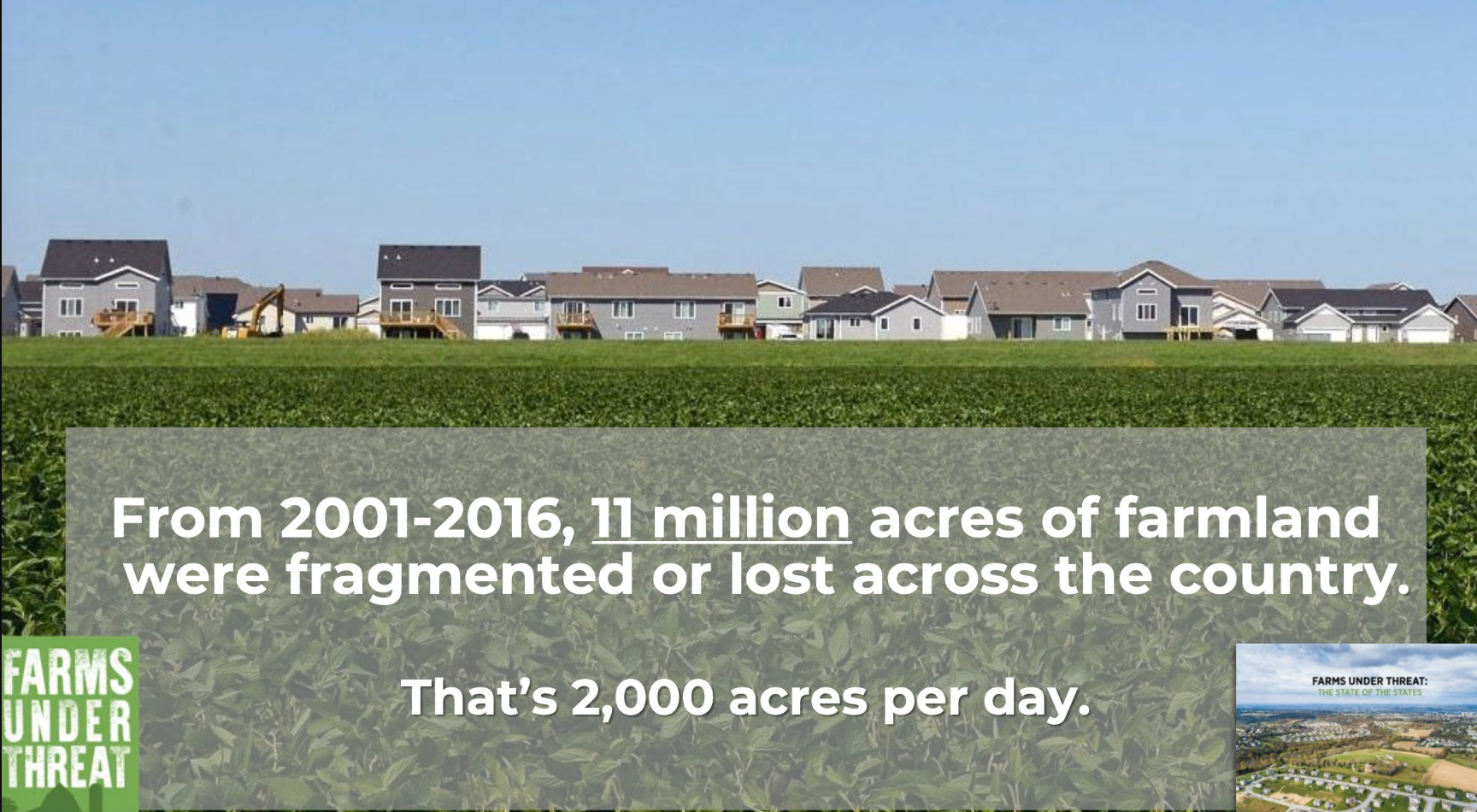
AFT shows us the enormous scale of the problem.
Nena Johnson then laid out Wally Farms' Farm Entrepreneurship Program, one alternative path for getting land into the hands of farmers in our area.
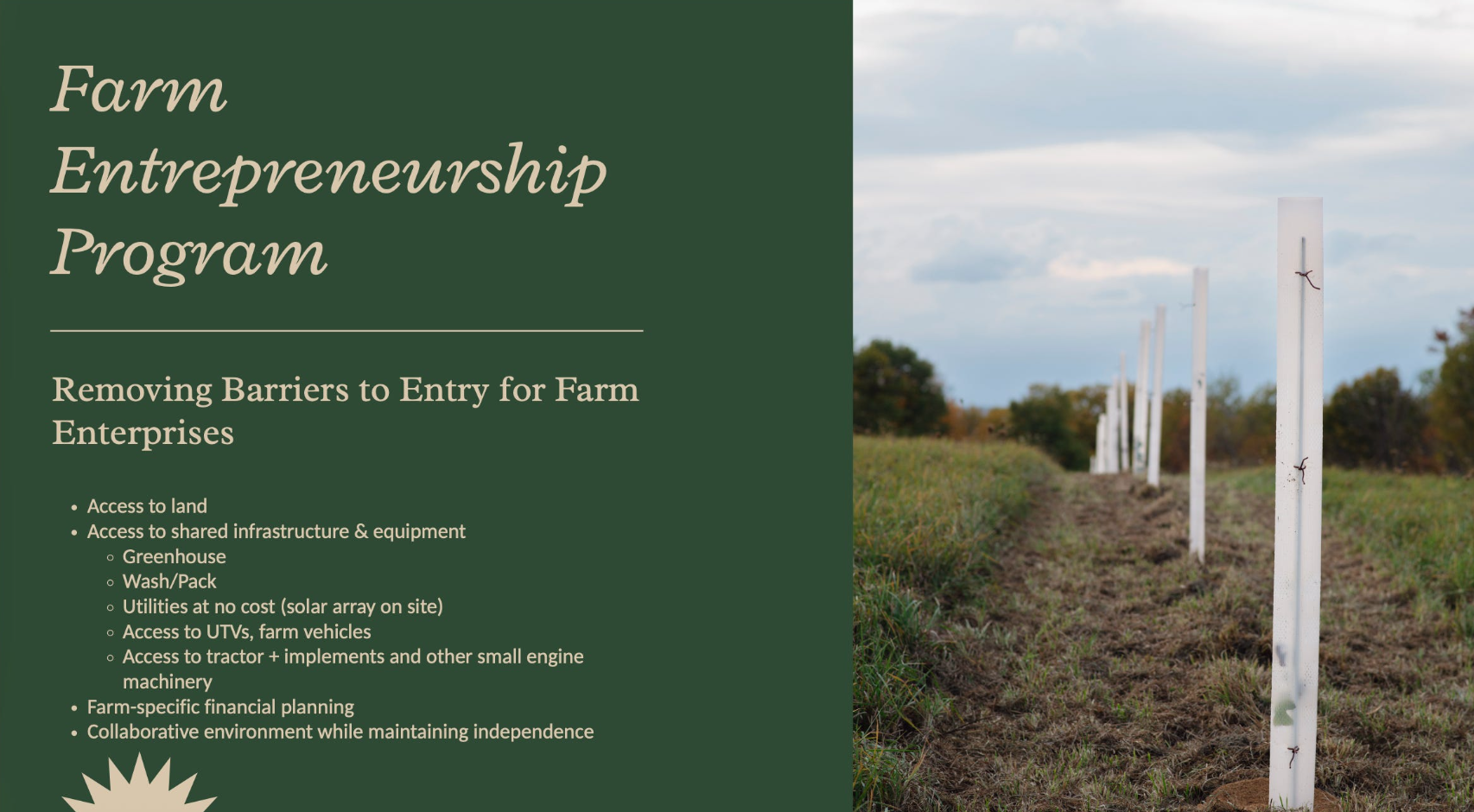
Overview of Wally Farms’ program
Francis Yu of West Branch Commons followed, sharing the strides their community land project has made; through ongoing fundraising, they're in the home stretch of finalizing a purchase to house their QTBIPOC farming collaborative.
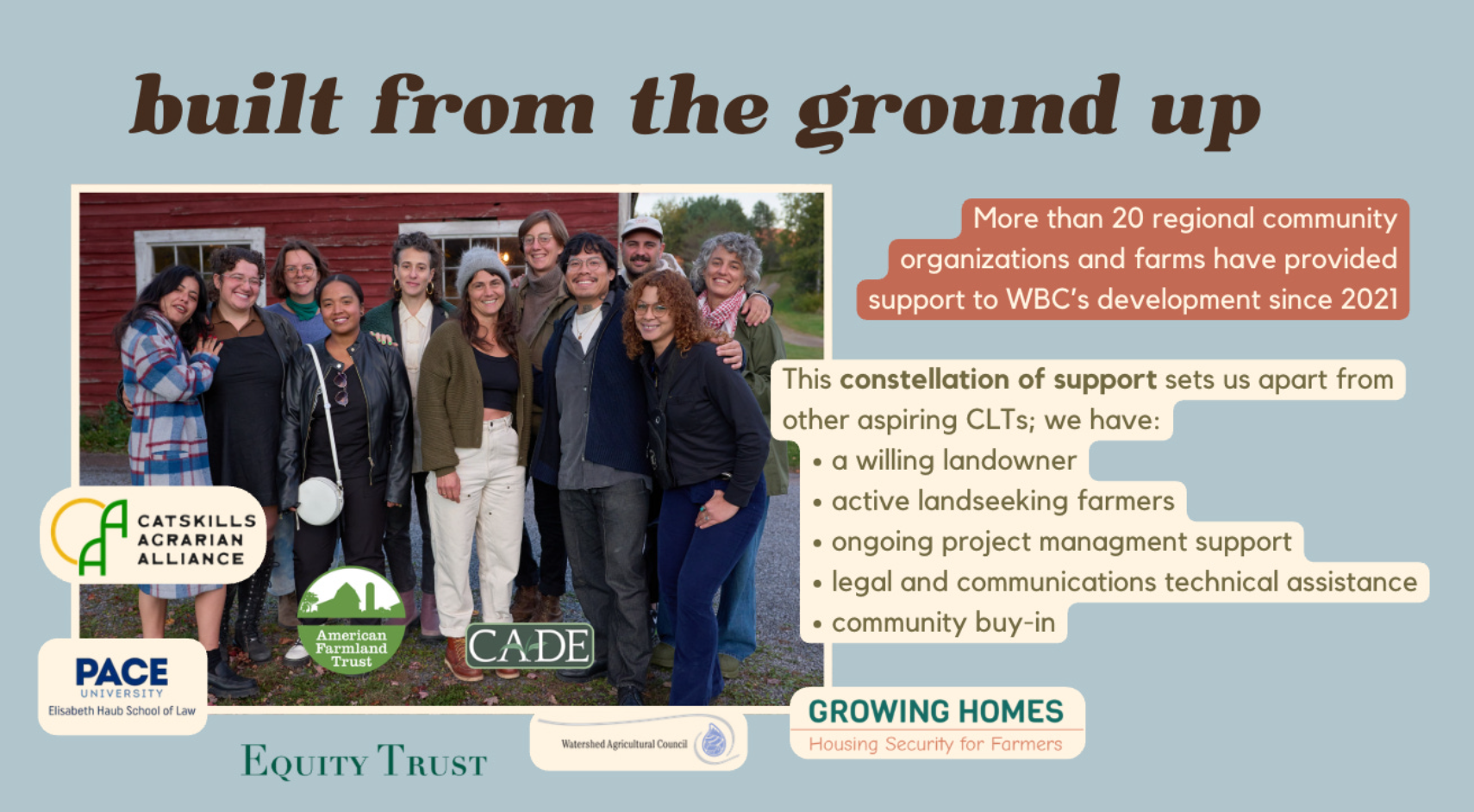
WBC is building community while they build their farm project.
We also heard from farmers in each program — Aviva Tilson of Wally Farms, Kitty Wilson of Iridescent Earth Collective, and Stormie of Deep Roots Farm — whose stories, alongside the providers’, gave us a well-rounded picture of what’s possible.
And we closed out the day with farmer-focused financial advisor, Michael Robertson, with some clarity around farm viability and quality of life.
As federal programs retreat, it’s clearer than ever that the work of keeping farmland in farmers’ hands will depend on the partnerships, programs, and people we build right here at home.